
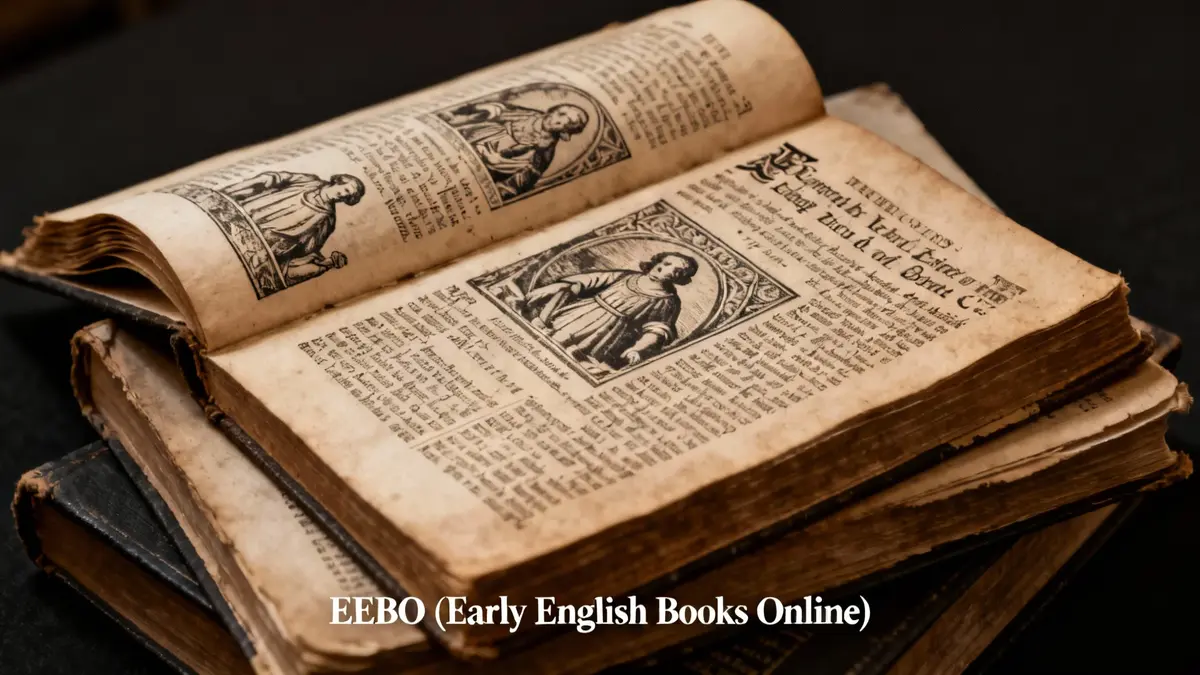
EEBO, or Early English Books Online, is a groundbreaking digital collection that brings together virtually all known works printed in English between 1473 and 1700. For researchers, literature students, historians, and educators, EEBO offers direct access to original texts, allowing an in-depth exploration of early modern English language, literature, and culture.
The importance of EEBO extends beyond simply reading old books. For scholars, it provides a primary source for studying historical language trends, author styles, and textual variations over centuries. Content creators and educators can also leverage EEBO to illustrate the richness of English language history, showing how words, phrases, and stylistic conventions have evolved. By exploring EEBO, users gain a unique window into the English of the past, connecting historical insights with modern linguistic understanding.
EEBO is especially relevant today, as it complements other English corpora like COHA, COCA, and NOW, but focuses on historical texts, offering perspectives that modern corpora cannot provide. For anyone interested in the roots of English language and literature, EEBO is an invaluable resource that bridges the past with contemporary study and analysis.
What is EEBO? (Easy-to-Understand Explanation)
EEBO, or Early English Books Online, is a digital corpus of early modern English texts, designed to make historical works accessible to scholars, students, and anyone interested in the origins of English literature. It allows users to explore how English was written and used over more than two centuries, offering insights into language, culture, and society during the early modern period.
1. Definition
EEBO is essentially a comprehensive digital archive of books printed in English between 1473 and 1700. It includes:
- Literary works such as plays, poetry, and prose
- Religious texts and sermons
- Historical documents, pamphlets, and political writings
With EEBO, users can search for specific words, phrases, or texts, giving them the ability to analyze language in its original context.
2. Short History and Developers Behind EEBO
EEBO was developed to digitize and preserve early English texts, which were previously only available in rare book collections. The project involved collaboration between:
- Universities and libraries specializing in early modern texts
- Digital humanities experts focusing on text preservation and accessibility
- Researchers aiming to create a usable corpus for linguistic, historical, and literary studies
The goal was to make these texts searchable and accessible worldwide, bridging the gap between historical documents and modern digital research.
3. How EEBO Differs from Other Corpora and Dictionaries
Unlike modern corpora such as COCA or NOW, EEBO focuses exclusively on historical texts, providing context that contemporary resources cannot. Key differences include:
- Covers English texts from 1473–1700, rather than contemporary or modern periods
- Offers full-text access to original books, not just frequency or concordance data
- Includes metadata such as author, date, publisher, and location, allowing detailed research
EEBO is not a dictionary—it does not define words in modern terms—but it provides authentic historical usage, making it invaluable for studying how English has evolved.
EEBO serves as a bridge between history and language, allowing users to explore texts that shaped English literature and thought. It complements modern corpora like COHA or COCA by offering a historical perspective that is critical for understanding how English developed over time.
How EEBO Collection Works
EEBO is not just a digital library; it is a carefully curated corpus that brings together historical English texts in a structured, searchable format. Understanding how these texts are collected and maintained helps users appreciate the reliability and scope of the resource.

1. Sources of EEBO
The EEBO Corpus draws from a wide range of printed materials from the early modern period, including:
- Books, pamphlets, and broadsides printed in English between 1473 and 1700
- Religious texts, sermons, and theological works
- Literary works such as poetry, plays, and prose
- Historical and political documents, including speeches and pamphlets
By including materials from various genres and regions, EEBO provides a comprehensive snapshot of early English language usage, reflecting both formal and informal writing styles.
2. Ensuring Accuracy and Text Quality
EEBO places a strong emphasis on accuracy and preservation of the original texts. The collection process includes:
- High-resolution digitization of rare and fragile books
- Careful transcription of original spelling, punctuation, and formatting
- Metadata tagging for author, publication date, publisher, and location
This meticulous approach ensures that researchers can trust the authenticity of the texts while conducting linguistic or historical analysis.
3. Updates and Digitization Process
While EEBO covers historical texts, the project is ongoing, with continuous efforts to expand and improve the corpus:
- Digitizing previously inaccessible rare texts
- Enhancing search functionality and user interface
- Integrating tools for linguistic analysis, such as concordance and collocation features
Through these efforts, EEBO remains a dynamic resource for scholars and enthusiasts, bridging centuries of English language history in a digital format.
By understanding how EEBO collects, preserves, and updates its texts, users can confidently explore early modern English, knowing that the corpus represents a reliable and comprehensive source. It allows researchers, students, and educators to connect the historical roots of English with contemporary studies, making it an essential tool for both linguistic and literary scholarship.
Benefits of Using EEBO
EEBO offers far more than access to historical texts; it provides a window into the language, culture, and ideas of early modern England. By exploring this corpus, users gain insights that are impossible to obtain from contemporary sources alone.
1. For Researchers and Historians
For researchers, historians, and scholars of early modern England, EEBO is a primary source for studying historical language, literary trends, and societal context.
- Analyze changes in vocabulary, grammar, and spelling over centuries
- Study historical events and cultural shifts through contemporary texts
- Trace the evolution of literary styles and author-specific patterns
EEBO enables scholars to connect linguistic analysis with historical understanding, making it an indispensable tool for academic research.
2. For Literature Students and Scholars
Literature students and scholars benefit from EEBO by gaining direct access to original works from iconic authors and lesser-known writers alike.
- Read plays, poetry, and prose in their original form
- Explore how themes and motifs evolved in early modern literature
- Compare different editions and spellings to understand textual history
By engaging with authentic texts, students develop a deeper appreciation for the richness of English literature and its historical context.
3. For Content Creators and Educators
EEBO is not just for academics; content creators, educators, and language enthusiasts can also draw inspiration from historical English texts.
- Illustrate the historical roots of words, phrases, and idioms in teaching or writing
- Adapt historical texts for modern audiences, highlighting linguistic evolution
- Use authentic examples to enrich lessons, articles, or digital content
Through EEBO, users can bridge past and present, making early modern English accessible and engaging for today’s learners and audiences.
Overall, EEBO empowers users to explore the early English language in depth, uncover patterns, and understand the historical context behind words and expressions. It transforms static historical books into dynamic research and learning tools, making early modern English both relevant and meaningful today.
Key Features of EEBO
EEBO is more than just a digital library—it’s a fully searchable corpus that provides tools to explore early modern English with precision. Understanding its key features helps users maximize the value of this historical resource.
1. Search by Word, Phrase, or Text Segment
EEBO allows users to perform flexible searches across its entire collection, making it easy to find specific words, phrases, or passages.
- Search for a single word or phrase to see every occurrence across centuries
- Locate text segments to study usage in context
- Use advanced search filters to narrow results by date, author, or genre
This functionality ensures that researchers and students can quickly locate relevant examples and conduct detailed analyses of early English texts.
2. Full-Text Access
Unlike some historical databases, EEBO provides full-text access to each work, preserving original formatting and spelling.
- Read texts exactly as they were printed
- Compare different editions or printings of the same work
- Observe punctuation, capitalization, and orthography used historically
Full-text access is essential for linguistic analysis, textual comparison, and understanding the evolution of written English.
3. Metadata Search (Author, Date, Publisher, Location)
EEBO includes rich metadata for each text, enabling targeted research.
- Filter by author to study individual writing styles
- Search by publication date to analyze trends over time
- Explore works by publisher or location for historical context
Metadata search allows users to connect textual content with historical and cultural information, providing a deeper layer of insight.
4. Collocation and Concordance Tools
EEBO offers built-in linguistic tools that help users study how words are used in context.
- Concordance displays each occurrence of a word with surrounding text
- Collocation analysis identifies which words frequently appear together
- Frequency data highlights changes in word usage across centuries
These tools make EEBO not just a repository of texts but an interactive research platform, ideal for scholars, students, and anyone interested in historical English.
By combining these features, EEBO becomes a powerful, versatile resource. Users can not only read early English texts but also analyze language, study trends, and explore literary and historical contexts in a way that was never possible before digital corpora.
How to Use EEBO for Beginners
Getting started with EEBO may seem daunting at first, given the depth and historical span of the corpus. However, with a step-by-step approach, beginners can quickly navigate and make the most of its features.
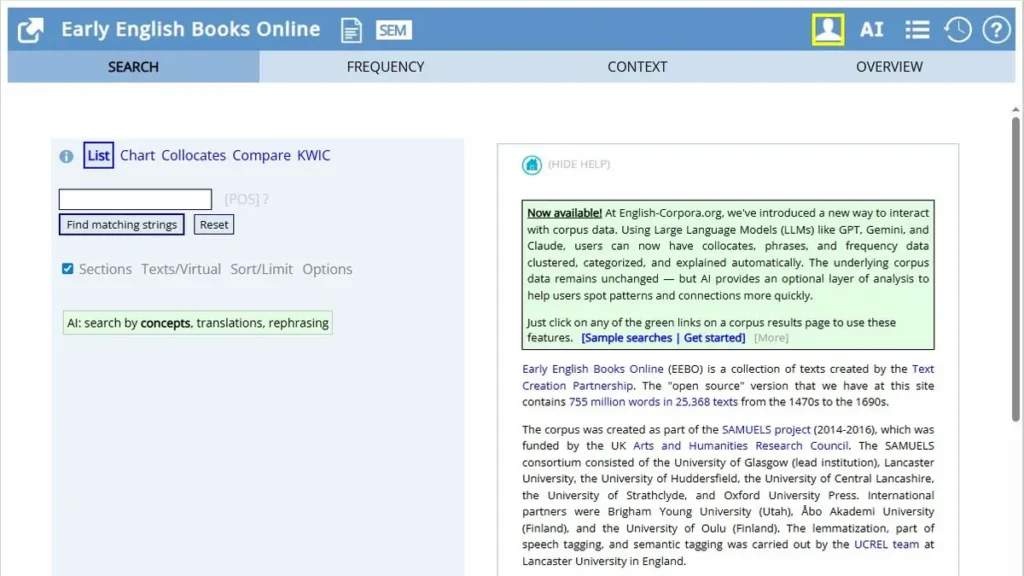
1. Creating an Account / Accessing EEBO
To access EEBO, users typically need institutional access through a library or university.
- Register or log in via Early English Book Online
- Check if your library offers remote access or on-campus credentials
- Familiarize yourself with the EEBO interface before diving into searches
Having proper access ensures that you can search, read, and analyze texts without restrictions.
2. Performing Your First Search
Once logged in, beginners should start with a simple search:
- Enter a word, phrase, or author in the search bar
- Use filters to narrow results by date, publication type, or location
- Observe how the term appears across different texts
Starting with basic searches helps users understand the structure of EEBO results before exploring more advanced functions.
3. Reading and Interpreting Results
EEBO displays results with full-text excerpts and metadata. Beginners should:
- Look at the context surrounding each occurrence of the word or phrase
- Note variations in spelling and punctuation common in early modern English
- Use metadata to understand the historical background of each text
This careful reading ensures that users interpret historical language accurately, rather than imposing modern assumptions.
4. Common Beginner Mistakes and Tips
New users often make similar mistakes when using EEBO:
- Searching for modern spellings instead of historical variants
- Ignoring metadata, which provides crucial historical context
- Overlooking differences in genre or author style
Tips to avoid these pitfalls:
- Try alternative spellings and variations of words
- Always check publication date, author, and location
- Compare multiple sources to see patterns and variations
By being mindful of these tips, beginners can confidently explore early English texts and make their research more accurate and meaningful.
EEBO is designed to be accessible and user-friendly, even for beginners. By following these steps and paying attention to historical context, anyone can unlock the richness of early modern English and begin analyzing texts with confidence and insight.
Short Case Studies / Examples
To truly understand the value of EEBO, it helps to explore practical examples of how the corpus can be used. These case studies demonstrate how researchers, students, and educators can analyze early modern English effectively.
1. Tracking Word Usage Over Centuries
EEBO allows users to study how certain words have evolved over time.
- Examine historical spellings and usage of words like “virtue,” “honour,” or “commerce”
- Compare how word frequency changed across decades
- Identify trends in literary, religious, or political contexts
This kind of analysis helps researchers understand shifts in vocabulary and meaning, revealing linguistic patterns across the early modern period.
2. Exploring Spelling Variations
Early English texts often contain multiple spellings for the same word. EEBO makes it possible to:
- Search for all variants of a word to see historical flexibility
- Observe how spelling standardized over time
- Compare usage across different regions or authors
Studying spelling variations provides insight into linguistic evolution and the historical challenges of reading early modern texts.
3. Studying Author-Specific Language Patterns
EEBO enables in-depth analysis of individual authors or works.
- Investigate Shakespeare’s choice of words across plays and sonnets
- Explore sermons by prominent religious figures to understand rhetorical style
- Compare linguistic patterns between writers from different social or geographical backgrounds
By analyzing author-specific patterns, students and researchers can gain a nuanced understanding of early modern English style and expression.
These case studies show that EEBO is not just a digital archive but a dynamic research platform. Users can explore word trends, spelling evolution, and authorial style, gaining insights that are impossible with modern texts alone.
EEBO vs Other English Corpora
While EEBO focuses on historical texts from 1473–1700, other corpora like COHA, COCA, and NOW offer complementary perspectives. Understanding the differences helps users choose the right resource for their research or study goals.
EEBO vs COHA
COHA (Corpus of Historical American English) covers texts from 1810 onward, focusing on American English.
- EEBO captures early modern English from the UK and Europe, before the colonization of America
- COHA tracks linguistic change over 200 years in American contexts
- EEBO is ideal for studying historical British English, literary texts, and early publications
Using both together allows researchers to trace the evolution of English from early modern to modern American usage.
EEBO vs COCA
COCA (Corpus of Contemporary American English) focuses on modern American English from the 1990s to today.
- EEBO offers historical depth, while COCA provides contemporary usage
- COCA is valuable for understanding current language trends, collocations, and frequency data
- EEBO offers authentic early English texts for historical research
Comparing EEBO with COCA helps users bridge historical and modern English, especially for linguistic or literary studies.
EEBO vs NOW
NOW Corpus provides real-time English from global news, unlike EEBO’s historical focus.
- EEBO is ideal for literary and historical research
- NOW is perfect for tracking current vocabulary, trends, and regional differences
- Together, EEBO and NOW allow analysis of English evolution from early modern texts to contemporary usage
When to Use EEBO vs Other Corpora
Knowing when to use EEBO instead of or alongside other corpora ensures effective research and learning:
- Use EEBO for early modern English texts, literary analysis, or historical language studies
- Use COHA for post-1810 historical American English
- Use COCA for contemporary American English trends
- Use NOW for real-time, global English in media
By understanding these differences, users can strategically combine corpora to gain both historical and modern perspectives on the English language.
Who Should Use EEBO
EEBO is a versatile tool that serves a wide range of users interested in historical English texts and early modern literature. By understanding who benefits most, readers can better appreciate the practical applications of this corpus.
1. Literature and History Scholars
Scholars focusing on early modern literature, history, and culture gain unparalleled access to primary sources.
- Study texts in their original form to analyze style, themes, and language
- Compare works by different authors and regions
- Trace the evolution of literary and rhetorical conventions over time
EEBO enables scholars to conduct detailed textual analysis that supports research, publications, and teaching.
2. Students of Early Modern English
Students studying linguistics, literature, or history benefit from EEBO by exploring authentic language use.
- Understand historical spellings, grammar, and vocabulary
- Analyze author-specific writing patterns and stylistic nuances
- Learn how English evolved from the 15th to 17th century
By engaging with original texts, students develop a deep understanding of early modern English, enhancing both academic knowledge and research skills.
3. Researchers in Linguistics and Digital Humanities
EEBO is ideal for linguistic research, corpus studies, and digital humanities projects.
- Conduct quantitative analyses of word frequency, collocation, and syntax
- Explore historical discourse patterns across genres and time periods
- Integrate EEBO data with computational tools for advanced linguistic studies
This makes EEBO a powerful resource for empirical research that combines historical and linguistic insights.
4. Educators and Content Creators
EEBO can also enrich teaching and content creation.
- Illustrate historical language and literature in lessons, lectures, or workshops
- Create engaging content that highlights early English usage for modern audiences
- Show linguistic evolution and the roots of contemporary English expressions
Educators and creators can connect learners with the past, making early modern English tangible and relevant today.
EEBO’s versatility ensures that it is not limited to academic research alone. By providing authentic texts, metadata, and analytical tools, it supports a wide spectrum of users—from scholars and students to educators and content creators—helping them explore the richness of early English language and culture.
Why EEBO Matters in the Era of AI and Digital Humanities
EEBO is more than a historical archive; it is a critical resource for understanding the foundations of English language and literature. In today’s era of AI and digital humanities, having access to authentic historical texts is essential for research, education, and technology development.
EEBO as a Window into Historical English
EEBO provides direct access to early modern English texts, allowing scholars and students to explore language as it was originally used.
- Study original spelling, grammar, and stylistic conventions
- Analyze historical usage patterns that shaped modern English
- Understand literary and cultural contexts from the 15th to 17th centuries
This historical insight is invaluable for anyone seeking to connect past and present language use.
Using EEBO to Train AI and Digital Tools
AI models and digital humanities projects benefit from high-quality historical datasets like EEBO.
- Train natural language processing models on early English texts
- Compare historical and contemporary language trends
- Develop tools for linguistic research, text analysis, or historical content creation
EEBO ensures that AI systems are grounded in authentic human language data, reducing the risk of misinterpretation or bias from modern-only datasets.
Risks of Ignoring Historical Sources
Relying solely on modern corpora like COCA or NOW can limit understanding of language evolution. By integrating historical corpora such as EEBO, researchers and developers can:
- Avoid misrepresenting early English words and meanings
- Capture nuances of historical texts that influence modern usage
- Build more accurate linguistic models for AI and educational purposes
For those interested in exploring English language corpora comprehensively, resources like the English Corpora Hub provide access to EEBO, COHA, COCA, and NOW, allowing users to bridge historical and contemporary English effectively.
EEBO demonstrates that historical texts remain relevant in the digital age. By combining early English sources with modern analytical tools, users can gain a complete picture of the English language, from its origins to its current forms.
Discovering EEBO Opens the Door to Early Modern English
Exploring EEBO offers a unique journey into the richness of early modern English, allowing users to study historical texts, analyze language evolution, and connect with the roots of literature and culture. Whether you are a researcher, student, educator, or content creator, EEBO provides the tools and insights to understand the past and inform contemporary studies, making it an invaluable resource in both academia and digital humanities.
Leave a Reply