
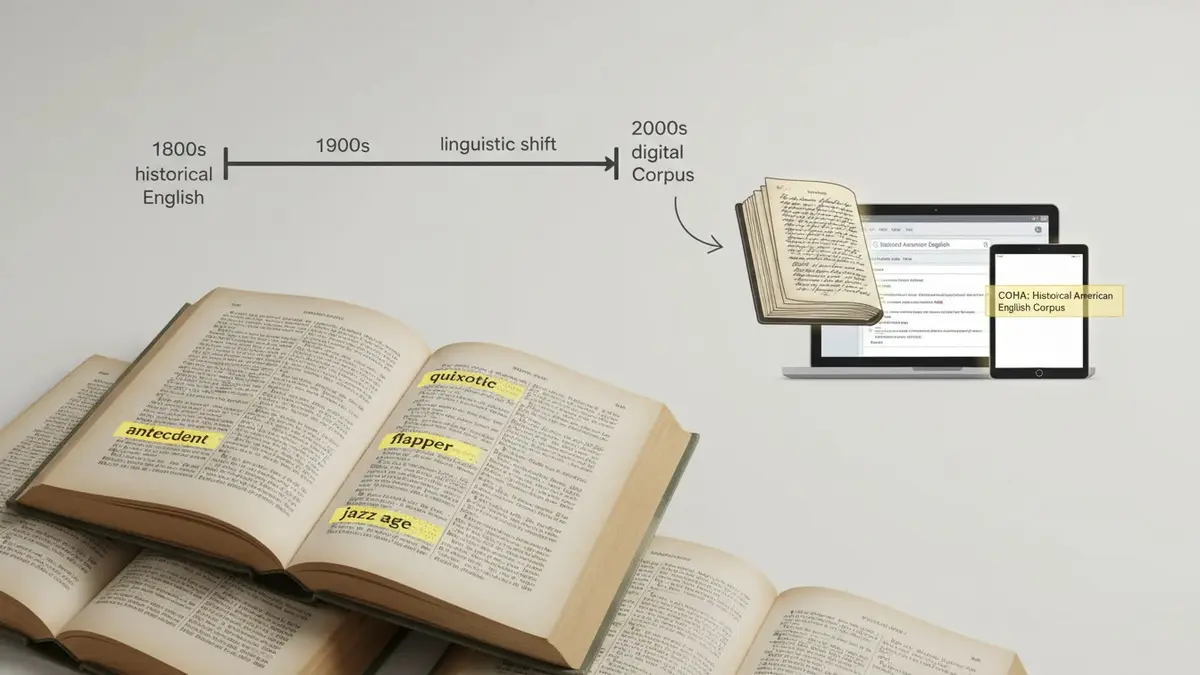
The Corpus of Historical American English (COHA) is a unique and invaluable resource for anyone interested in how American English has evolved over the past two centuries. Covering texts from the 1810s to the 2000s, COHA provides authentic examples of vocabulary, grammar, and style in historical contexts. This makes it a powerful tool for researchers, students, writers, and educators who wish to explore language in its historical depth.
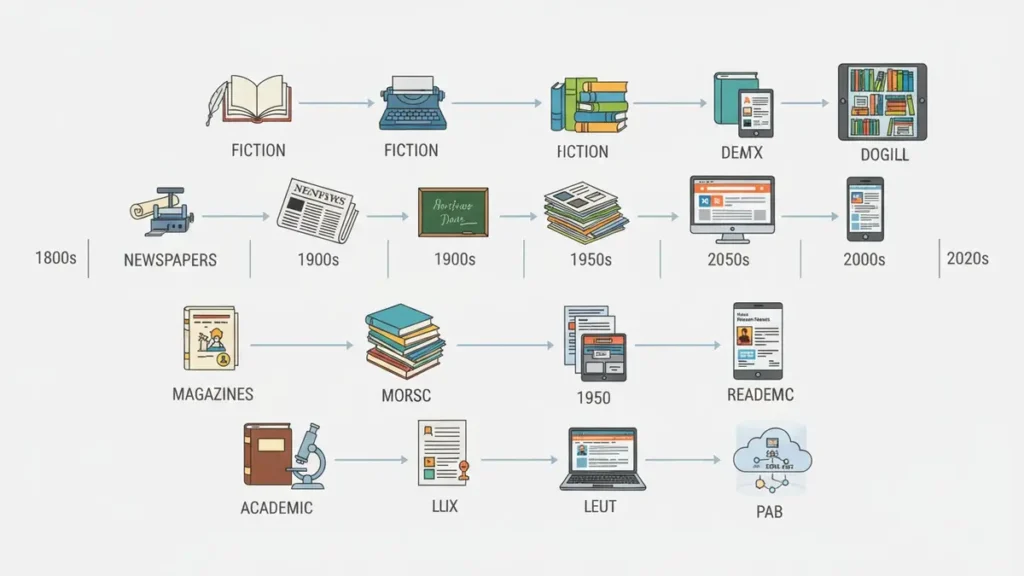
COHA draws from a wide range of genres, including fiction, newspapers, magazines, and academic texts. This diversity allows users to see how words and phrases were used in different contexts and how usage shifted over decades. For example, analyzing the emergence and decline of words like telegram or internet not only reveals linguistic patterns but also provides insight into historical societal changes.
By focusing on historical English, COHA offers a perspective that complements modern tools found in the English Corpora Hub, allowing users to explore language across both historical and contemporary contexts.
What is COHA? (Basic Explanation)
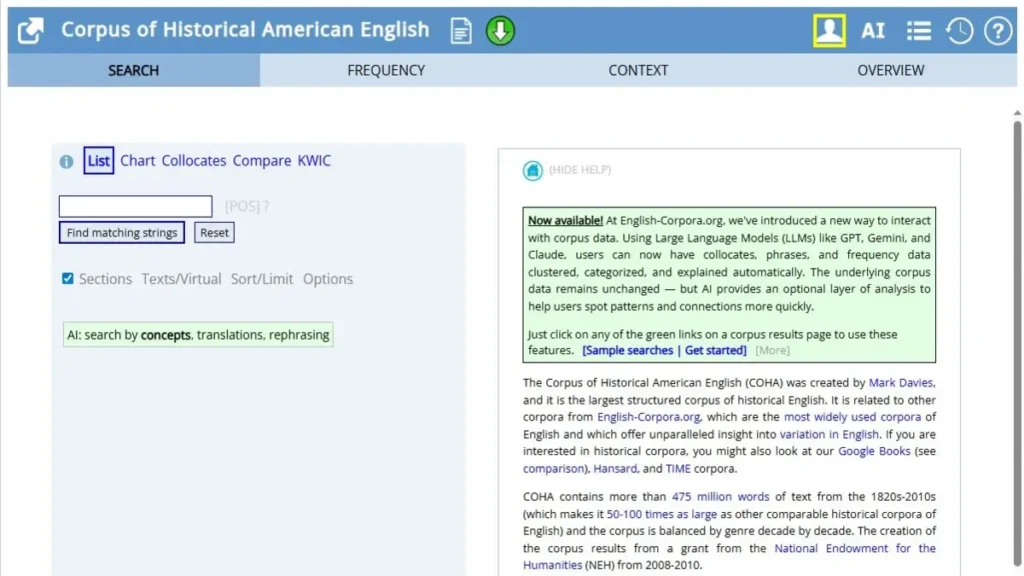
The Corpus of Historical American English (COHA) is a structured collection of texts designed to show how American English has developed from the 1810s through the 2000s. Unlike standard dictionaries or textbooks, COHA allows users to see words and phrases in authentic historical contexts, making it an essential tool for understanding language evolution.
1. Definition and Purpose
COHA covers multiple genres, including fiction, newspapers, magazines, and academic works. This wide coverage enables users to study shifts in vocabulary, grammar, and style over time, and to understand how historical events, cultural trends, and technological advances influenced language.
For example, examining the historical usage of words like telegram or computer provides insight into societal changes reflected in language. These authentic examples make COHA a key resource for learners, writers, and researchers seeking a deeper understanding of historical English.
2. Who Developed COHA and Its History
COHA was created by linguist Mark Davies, whose work ensured that the corpus includes a diverse range of sources and maintains high-quality, accurate data. This careful construction makes COHA one of the most reliable historical English corpora available, suitable for both research and practical exploration of language over time.
3. Why COHA is Unique
What sets COHA apart is its historical scope. While contemporary corpora focus on modern usage, COHA enables users to:
- Trace long-term changes in word usage and meaning.
- Explore historical collocations and idiomatic expressions.
- Compare language trends across genres and decades.
This focus allows learners and researchers to engage fully with historical English, gaining insights that are difficult to obtain from modern corpora alone.
How COHA is Collected and Maintained
Understanding how COHA gathers and maintains its data is crucial for appreciating its reliability and value. COHA is a carefully curated corpus, designed to provide accurate insights into historical American English across two centuries.
1. Sources of Data
COHA draws from a diverse array of text sources to ensure comprehensive representation of American English over time:
- Fiction: novels and short stories that reflect literary language.
- Newspapers: capturing everyday language and journalistic trends.
- Magazines: showing informal and semi-formal language in popular culture.
- Academic texts: representing formal, scholarly writing.
This multi-genre approach allows users to examine how the same word or phrase might appear differently in literature, journalism, or academia, making COHA a versatile tool for studying language evolution.
2. Ensuring Data Accuracy
COHA maintains high standards of accuracy through meticulous data collection and cleaning:
- Texts are checked for errors and inconsistencies.
- Metadata such as publication year, genre, and source type is included for every entry.
- Digital processing allows advanced searches, including KWIC, collocations, and frequency analysis.
These measures ensure that COHA provides trustworthy examples for research, writing, and educational purposes.
3. Time Span Covered
COHA covers texts from the 1810s to the 2000s, giving a detailed chronological view of language change. This extensive time span allows users to:
- Track the evolution of vocabulary and grammar.
- Study long-term trends in word usage and phrase popularity.
- Understand historical contexts that shaped American English.
By offering this historical breadth, COHA complements modern corpora and enables users to explore English language development in depth, forming a key part of any study in the English corpora hub.
Benefits of Using COHA
COHA offers a wide range of benefits for learners, researchers, writers, and educators. By exploring historical English through COHA, users can gain insights that go far beyond what standard dictionaries or textbooks provide.
1. For Linguistics Research
For researchers in corpus linguistics, COHA is invaluable for studying long-term trends in vocabulary, grammar, and syntax. By comparing word usage across decades, scholars can identify patterns of language change, track the emergence of new words, and observe shifts in meaning.
For example, analyzing the word telegram or internet over time illustrates not only linguistic change but also societal developments. These historical insights are essential for anyone examining how American English evolved over the past 200 years.
2. For Understanding Historical English Usage
COHA allows learners and writers to see how English was used in different historical periods. This is particularly useful for:
- Historical fiction writers seeking authentic language for characters and settings.
- Students studying how grammar, vocabulary, and style have evolved.
- Educators teaching language development and historical linguistics.
Examining KWIC examples and collocations in COHA helps users understand authentic historical usage, making learning and research more practical and meaningful.
3. For Writers and Content Creators
Writers and content creators can use COHA to enhance their work by creating content that reflects historical authenticity. Benefits include:
- Access to real examples of word usage in past centuries.
- Insights into stylistic and tonal shifts across genres.
- Evidence-based understanding of language trends for accurate storytelling or academic writing.
By focusing on COHA’s historical data, writers can produce content that is both engaging and linguistically accurate, while still having the option to explore modern English Corpora if desired.
4. For Educators and Students
Educators can integrate COHA into lessons to illustrate how English has evolved over time. Students benefit from seeing how words, expressions, and grammatical structures changed across centuries, enhancing both comprehension and analytical skills.
COHA’s historical perspective makes lessons more interactive and grounded in authentic examples, offering a deeper understanding of language development than contemporary texts alone.
Key Features of COHA
COHA offers a variety of powerful features that allow users to explore historical American English in depth. Understanding these features helps learners, writers, and researchers make the most of this historical English corpus.
1. Searching by Word, Lemma, or Part of Speech
COHA enables users to perform searches at multiple levels:
- Word search: find a specific word.
- Lemma search: retrieve all forms of a word.
- Part of speech filter: focus on nouns, verbs, adjectives, and more.
This flexibility allows users to study how words were used in different contexts and across time. For example, searching for the verb run will display its usage across decades and genres, helping learners and researchers identify historical patterns in grammar and meaning.
2. Collocations and Historical Patterns
Collocations—words that frequently appear together—can be examined over time in COHA. For instance, analyzing strong may reveal historical phrases like strong coffee, strong argument, or strong leader, showing how usage trends evolved over the centuries.
This feature is particularly useful for writers seeking authentic historical language or for researchers analyzing idiomatic expressions and lexical patterns.
3. KWIC (Key Word in Context) Across Decades
The KWIC feature displays keywords within their sentence context, enabling users to see exactly how words were used historically. By reviewing multiple examples, learners and researchers can understand semantic changes, stylistic shifts, and historical idiomatic usage.
This makes COHA an essential tool for anyone studying historical English, offering insights that dictionaries or static references cannot provide.
4. Frequency Analysis and Trend Observation
COHA provides frequency data for words and phrases across decades. This allows users to track rises and declines in popularity, revealing linguistic and cultural shifts.
For example, the word telegram peaks in the 19th century, while internet emerges in the late 20th century. Such trends give a clear picture of how language adapts to societal and technological changes.
5. Genre Comparison Across Time
COHA includes multiple genres such as fiction, newspapers, magazines, and academic texts. Users can compare how a word was used differently in literature versus journalism or scholarly writing over time.
This feature allows learners, educators, and researchers to understand both the meaning and the stylistic nuances of historical English, providing a richer, more authentic view of language evolution.
How to Use COHA for Beginners
Using COHA for the first time can feel overwhelming due to the range of features it offers. However, with a clear, step-by-step approach, beginners can quickly start exploring historical American English with confidence.
1. Creating an Account and Logging In
To access COHA, users need to create a free account on the COHA official website. After signing up, logging in provides full access to search tools, KWIC views, and frequency data. Having an account also allows you to save searches for later reference, which is particularly useful for ongoing research or writing projects.
2. Conducting Your First Search
Start by entering a word you want to explore in the search bar. For beginners, it’s helpful to choose a common word, such as make or strong. COHA will display results across decades and genres, showing you how the word was historically used.
Be sure to try different search types: word search, lemma search, or part-of-speech filters, depending on what aspect of the word you want to study.
3. Reading and Understanding Results
COHA displays results in KWIC (Key Word in Context) format, showing the target word in the surrounding sentence. Beginners should take time to read through these examples, noting differences in usage, style, and collocations. Observing patterns across decades helps you understand historical shifts in meaning and context.
4. Tips for Beginners
- Start simple: Focus on one word or phrase at a time.
- Check multiple genres: Compare usage in fiction, newspapers, and academic texts to see stylistic differences.
- Use filters gradually: Don’t worry about advanced options at first; familiarize yourself with basic search and KWIC reading first.
These small steps make exploring COHA manageable and enjoyable, even for those new to corpus research.
5. Common Mistakes and How to Avoid Them
- Skipping context: Always read KWIC lines fully to understand the sentence and surrounding words.
- Overlooking genres: Limiting analysis to one genre can give a skewed understanding of historical usage.
- Ignoring historical trends: Pay attention to decade-based frequency data; words can change meaning over time.
By keeping these tips in mind, beginners can avoid confusion and make meaningful discoveries with COHA.
Short Case Studies: Analyzing Words with COHA
To fully appreciate COHA, seeing real examples of word analysis is essential. These case studies demonstrate how the corpus can reveal historical usage patterns, collocations, and trends over decades.
1. “Make” vs “Do”
The words make and do often confuse learners of English today, but COHA can show how these verbs were historically used. By searching for make in COHA, you can see examples like make a decision or make a promise, while do appears in phrases like do homework or do one’s duty.
Observing these patterns over decades reveals subtle shifts in usage and frequency, helping writers, learners, and researchers understand both historical and modern contexts.
2. Collocations with “Strong”
Collocations—words that frequently appear together—are key to understanding natural historical usage. Searching strong in COHA shows phrases like strong coffee, strong argument, and strong leader.
By comparing these collocations across genres and decades, you can see which combinations were more popular in the 19th century versus the 20th century. This insight is valuable for authors, historians, and language enthusiasts aiming to use authentic period language.
3. Tracking Popular Words Over Time
COHA’s frequency data enables users to track long-term trends. For example, the word telegram peaks in the late 19th century and declines in the 20th, while internet emerges later.
Studying such patterns provides not only linguistic insights but also cultural context, showing how societal and technological changes influence language. This type of historical analysis is particularly useful for research, teaching, and historical writing.
COHA vs Other English Corpora
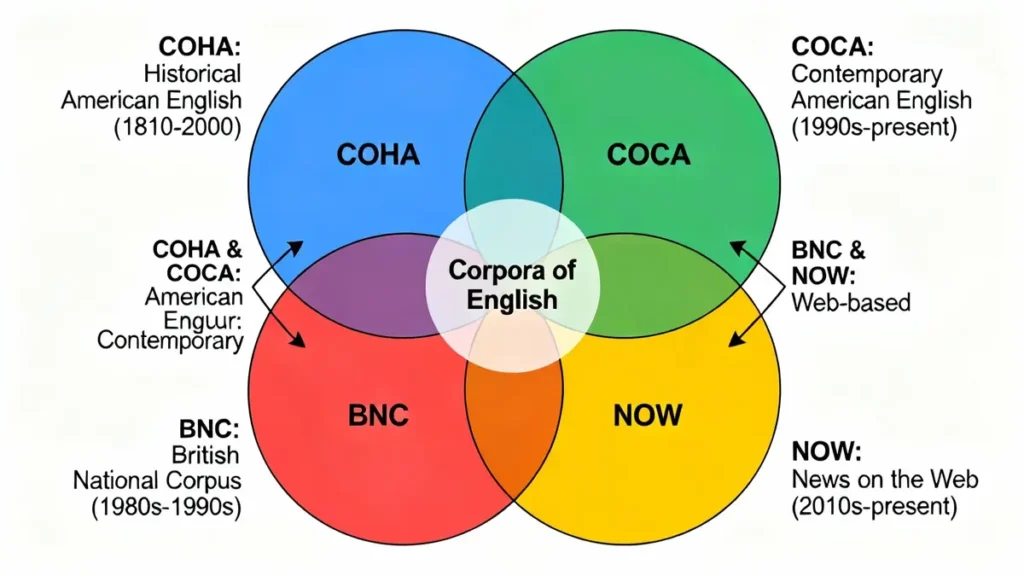
While COHA provides a rich historical perspective, it is helpful to understand how it compares with other English corpora. This comparison allows users to choose the most suitable tool depending on their research or learning goals.
COHA vs COCA
COHA and COCA serve different purposes. COHA focuses on historical American English from the 1810s to the 2000s, providing insights into how language has evolved over two centuries. In contrast, contemporary corpora like COCA offer a snapshot of modern English usage, reflecting current vocabulary, grammar, and style trends.
This distinction makes COHA ideal for historical studies, linguistic research on language change, and writers interested in authentic historical language, while COCA is more suited for understanding contemporary language patterns.
COHA vs NOW Corpus
The NOW Corpus (News on the Web) offers real-time data from online news sources. While it is excellent for observing immediate trends in modern English, it lacks the historical depth that COHA provides. Users interested in studying long-term language evolution will find COHA far more suitable for understanding how words, phrases, and idioms developed over decades.
COHA vs BNC (British National Corpus)
The BNC is focused on British English and covers both spoken and written texts primarily from the late 20th century. COHA, on the other hand, provides extensive historical data from American English, making it uniquely valuable for researchers studying language evolution in the United States.
When to Use COHA
COHA is the preferred choice when your goal is to:
- Analyze historical trends in American English.
- Study changes in collocations, syntax, and style over time.
- Access authentic examples of language across multiple genres.
For contemporary English studies or comparisons with current usage, corpora like COCA or NOW can complement COHA, but for historical research, COHA remains the most comprehensive and reliable source.
Who Should Use COHA
COHA is a versatile tool, but understanding who can benefit most from it helps users make the best use of its resources. Its applications span education, research, writing, and historical studies.
1. English Language Learners
Learners interested in historical English or understanding how the language evolved over time will find COHA invaluable. By examining authentic examples from past centuries, students can:
- Understand how vocabulary and grammar have changed.
- Explore historical collocations and idiomatic expressions.
- Gain a richer perspective on English beyond contemporary usage.
2. Writers, Editors, and Content Creators
For writers and editors, COHA offers authentic historical language to enhance storytelling, articles, or academic content. Benefits include:
- Accurate period-specific language for historical fiction or essays.
- Insights into style and tone across genres and decades.
- Evidence-based understanding of language trends over time.
This makes COHA a vital tool for anyone aiming to produce historically accurate or linguistically informed content.
3. Linguistic Researchers
Researchers in linguistics and language studies can leverage COHA to study long-term trends in American English. Applications include:
- Analysis of word frequency and semantic shifts.
- Study of historical collocations and syntactic patterns.
- Cross-genre and decade-based comparisons for scholarly research.
COHA’s comprehensive historical data supports rigorous academic investigations into language evolution.
Educators
Teachers and educators can incorporate COHA into their lessons to illustrate how English has evolved. By using real historical examples, educators can:
- Demonstrate language change over time.
- Encourage critical thinking about historical and cultural influences on language.
- Enhance students’ engagement with authentic texts.
Why COHA Matters in the Era of AI and Machine Learning
In today’s age of artificial intelligence and machine learning, having access to authentic historical language data is more important than ever. COHA provides a unique resource that helps researchers, educators, and developers understand how English has evolved, ensuring that AI systems are trained with accurate and contextually rich examples.
1. COHA as a Source of Authentic Language Data
AI language models rely heavily on large text datasets to learn patterns, vocabulary, and grammar. By including historical texts from COHA, these models can:
- Recognize historical forms of words and phrases.
- Understand shifts in meaning and usage over time.
- Generate text that accurately reflects different historical periods.
Without access to reliable historical corpora like COHA, AI models risk missing crucial context or producing content that misrepresents past language usage.
2. Supporting Research and Development in AI
COHA is invaluable for linguists and AI researchers who want to:
- Analyze trends in language change over decades.
- Develop tools that understand historical context in English.
- Compare modern usage with historical patterns for better natural language understanding.
In this way, COHA serves not only as a research tool but also as a bridge between historical knowledge and modern technological applications.
3. The Risks of Relying Solely on AI
While AI can generate text quickly, relying exclusively on machine-generated language without consulting authentic sources can be risky:
- Nuances and historical accuracy may be lost.
- Misinterpretation of idiomatic expressions or context is possible.
- Human understanding of language evolution can weaken.
By combining AI tools with COHA, learners, researchers, and writers ensure that their work remains grounded in real historical usage, avoiding overdependence on machine-generated text.
Exploring COHA Opens the Door to Understanding Historical English
COHA offers an unparalleled window into the history of American English, providing authentic examples of vocabulary, grammar, and style across two centuries. By exploring this corpus, learners, writers, educators, and researchers can gain insights into how language has evolved, understand historical contexts, and enrich their own work with accurate, period-specific language.
Using COHA, you can:
- Trace long-term changes in word usage and meaning.
- Discover historical collocations and idiomatic expressions.
- Compare language trends across genres and decades.
- Support research, teaching, and writing with authentic historical data.
For anyone interested in exploring historical and modern English, COHA serves as a basic resource, complemented by articles available on the English Corpora Hub for broader language exploration.
By starting with COHA, readers can build a solid understanding of how American English developed over time, making it an essential resource for historical research, education, and writing.
Leave a Reply