
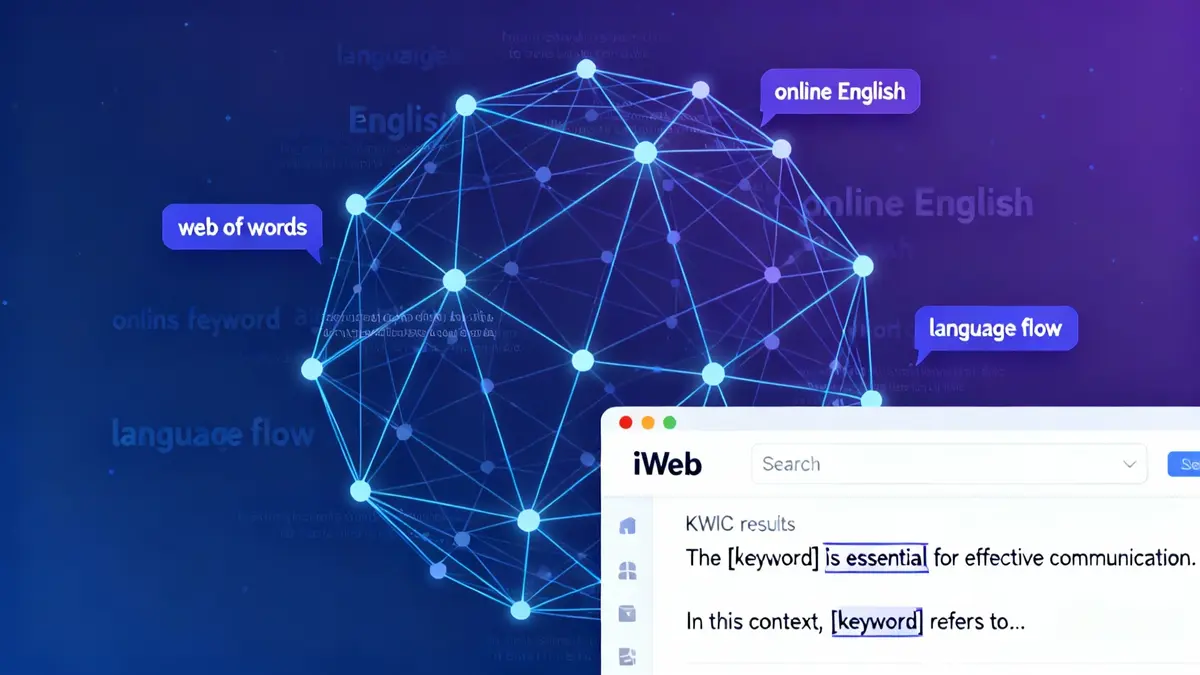
The iWeb Corpus is a vast and dynamic collection of real-world English from the internet, containing over 14 billion words drawn from blogs, news websites, forums, and other online sources. Unlike traditional corpora that rely on books or academic texts, iWeb captures how English is truly used in modern digital communication, providing a unique window into contemporary language.
Whether you are a content creator, student, educator, or linguist, iWeb offers the tools to explore vocabulary, idiomatic expressions, collocations, and emerging trends across the web. By studying iWeb, users gain insights into authentic online English, helping them understand language patterns, track evolving usage, and apply this knowledge in writing, teaching, or research.
This guide will take you through everything you need to know about iWeb, from its key features and data sources to practical examples and tips for beginners, empowering you to harness the full potential of web-based English data.
What is iWeb Corpus?
The iWeb Corpus is one of the largest collections of authentic, web-based English, designed to reflect how language is used in real-world online contexts. With over 14 billion words drawn from a variety of online sources, iWeb provides an unparalleled view of contemporary English usage, making it a valuable tool for researchers, students, and content creators alike.
1. Definition
At its core, iWeb is a digital database of English texts sourced directly from the web. This includes content from:
- Blogs and personal websites
- News portals and online magazines
- Discussion forums and social media posts
By collecting text from authentic online environments, iWeb allows users to study natural language patterns, vocabulary trends, and phrase usage as they occur in everyday digital communication.
2. Development and Purpose
iWeb was developed by linguistic researchers to capture the evolving nature of English on the internet.
- Designed to support language research, digital humanities, and educational projects
- Continuously updated to include current online texts
- Focuses on providing real-world examples rather than curated or formal texts
Its purpose is to give users a true representation of how English is actually used online, making it distinct from corpora built from books or newspapers.
3. Unique Advantages
What sets iWeb apart from other language tools is its scale and relevance:
- Massive size: billions of words ensure statistically meaningful analysis
- Diverse sources: covers multiple online genres and topics
- Contemporary language: reflects emerging vocabulary and idioms
- Contextual richness: allows detailed study of words in natural usage
These features make iWeb a practical and reliable resource for anyone seeking to understand modern English in digital contexts.
How iWeb Data is Collected
Understanding the sources and methodology behind iWeb is crucial for appreciating the reliability and scope of this web-based corpus. iWeb gathers authentic English texts directly from the internet, ensuring that the data reflects real-world language usage.
1. Web Sources
iWeb collects texts from a wide variety of online platforms, capturing diverse registers and topics:
- Blogs and personal websites: informal writing, everyday expressions, and conversational language
- News websites and online magazines: journalistic style, formal language, and trending topics
- Discussion forums and comment sections: interactive language, debates, and colloquial expressions
By combining these sources, iWeb provides a comprehensive view of English as it is used in different online contexts.
2. Scale and Coverage
The massive size of iWeb, with over 14 billion words, allows for statistically robust analyses:
- Represents language used globally in English-language websites
- Covers multiple genres and subjects, from technology to lifestyle and culture
- Enables studies of rare words, emerging phrases, and collocations in context
This scale ensures that iWeb is suitable for both detailed linguistic research and practical applications, such as content creation or language learning.
3. Ensuring Accuracy and Relevance
To maintain quality, iWeb employs filtering and verification processes:
- Eliminates duplicate or low-quality content
- Focuses on texts with proper formatting and linguistic clarity
- Updates regularly to reflect current online usage trends
These measures guarantee that the data in iWeb is both authentic and reliable, providing a trustworthy foundation for research and analysis.
By understanding how iWeb collects its data, users can confidently explore patterns in contemporary English, knowing the corpus reflects authentic, real-world usage across a wide spectrum of online sources.
Benefits of Using iWeb
The iWeb Corpus offers a wide range of benefits for anyone interested in modern English usage, from students and educators to content creators and researchers. By studying real-world language as it occurs online, users gain insights that are difficult to obtain from traditional sources.
1. For Content Creators and SEO
iWeb is an invaluable tool for writers and marketers seeking to craft authentic, engaging content:
- Discover popular phrases and collocations in online communication
- Identify trending vocabulary relevant to target audiences
- Analyze contextual usage to improve readability and natural flow
Using iWeb helps content creators align their writing with actual online language patterns, enhancing engagement and SEO effectiveness.
2. For Students and Language Learners
Students learning English can use iWeb to observe authentic usage in real contexts:
- Study modern vocabulary, idioms, and expressions
- See how words are used differently across genres, such as blogs, news, and forums
- Understand practical language patterns beyond textbooks
This makes iWeb a dynamic learning resource for improving both comprehension and writing skills.
3. For Researchers and Linguists
iWeb provides researchers with massive, real-world datasets for linguistic analysis:
- Examine collocations, frequency trends, and word usage across billions of words
- Study emerging language patterns and internet-specific expressions
- Conduct quantitative and qualitative analyses with authentic web data
With iWeb, researchers gain a true snapshot of contemporary English, supporting rigorous academic studies.
4. For Educators
Educators can leverage iWeb to illustrate real-world English usage in classrooms or workshops:
- Provide examples of current, natural language in digital contexts
- Demonstrate differences between formal, informal, and online registers
- Support students in adapting their writing to real-world communication
By integrating iWeb into teaching, educators help learners bridge the gap between textbook English and modern online usage.
The iWeb Corpus demonstrates that studying English in its natural online environment can unlock practical insights for writing, teaching, learning, and research, making it a truly versatile and valuable resource.
Key Features of iWeb
The iWeb Corpus offers a variety of tools and features designed to help users explore real-world English usage in depth. Understanding these features ensures that you can analyze language effectively and efficiently.

1. Search by Word or Phrase
iWeb allows users to search for specific words, phrases, or lemmas, providing examples from billions of words:
- Examine how words are used in different online contexts
- Discover frequency and trends of particular terms
- Analyze emerging vocabulary in real-time digital communication
This feature is especially useful for writers, researchers, and learners who want to see words in authentic, everyday usage.
2. KWIC (Key Word in Context)
The KWIC feature displays words in their immediate context, making it easy to understand usage patterns:
- View how a word is used in different sentence structures
- Compare formal and informal contexts
- Identify common collocations and phrases surrounding the word
KWIC allows for a practical, context-driven analysis that goes beyond dictionary definitions.
3. Collocations and Natural Language Patterns
iWeb helps users discover words that frequently appear together, revealing natural language patterns:
- Identify common phrase combinations and idiomatic expressions
- Analyze how words interact in authentic online communication
- Support content creation, language learning, and linguistic research
This makes it easier to write naturally and understand real-world English.
4. Frequency Analysis and Trends
iWeb provides data on word frequency and usage trends across billions of words:
- Track how often words or phrases appear online
- Detect emerging terms and trends in digital language
- Compare usage across different web genres and contexts
By analyzing frequency and trends, users can gain insights into contemporary English usage and evolving language patterns.
The combination of these features makes iWeb a powerful and versatile tool for anyone looking to explore modern English in its natural digital environment. From detailed word analysis to understanding online communication trends, iWeb equips users with the knowledge and insights needed for research, learning, and content creation.
How to Use iWeb for Beginners
Getting started with the iWeb Corpus is straightforward, even for beginners. By following a few simple steps, users can quickly begin exploring authentic English usage and uncover valuable insights.
1. Accessing the Corpus
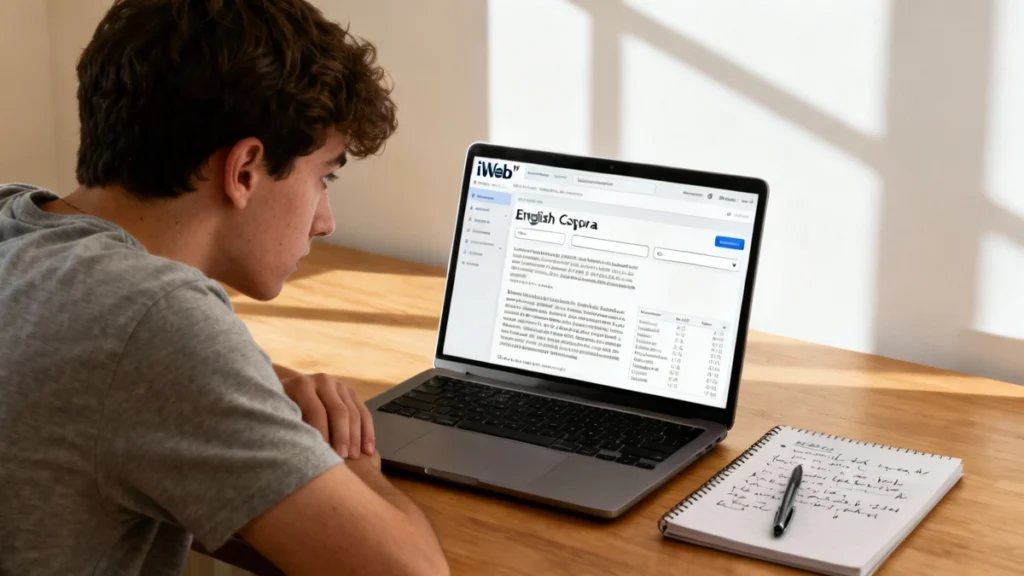
To use iWeb, you typically access it through a web-based interface or institutional subscription:
- Navigate to the iWeb portal using your browser
- If required, create an account or log in through your institution
- Familiarize yourself with the search interface and menus
Starting with the interface ensures you can perform searches efficiently and understand the data presented.
2. Performing Your First Search
Begin by searching for a word or phrase of interest:
- Enter the term in the search bar
- Select options such as lemma search or exact phrase match
- Choose filters if you want to narrow results by genre, website type, or date
This allows you to see how the term is used across diverse online sources.
3. Reading and Interpreting KWIC Results
Once the search is complete, iWeb presents results in KWIC (Key Word in Context) format:
- Focus on the highlighted word in each sentence
- Observe surrounding words to understand common collocations
- Note differences in usage across various web genres
KWIC results help beginners visualize real-world language patterns quickly.
4. Tips for Beginners
To avoid confusion and make the most of iWeb:
- Start with simple, common words to get familiar with KWIC outputs
- Explore different contexts to see variations in meaning
- Use the frequency and collocation tools to discover patterns you might not notice immediately
These strategies help users gain confidence and make meaningful observations.
5. Common Mistakes to Avoid
Beginners often make these errors:
- Ignoring context and interpreting words in isolation
- Overlooking genre differences (e.g., blogs vs news sites)
- Skipping the collocation analysis, which provides insight into natural usage
Being aware of these pitfalls ensures that your analysis of online English is accurate and reliable.
By following these steps, beginners can quickly navigate iWeb Corpus with confidence, exploring real-world English and gaining insights that are applicable for research, writing, or language learning.
Short Case Studies / Examples
To understand the practical value of iWeb, let’s explore a few real-world examples that illustrate how this corpus can be used for analysis.
1. Analyzing Common Online Phrases
By searching for everyday expressions like “as a result” or “at the same time”, users can:
- Observe frequency and context of these phrases in blogs, news, and forums
- Identify variations in usage across different online genres
- Learn how these phrases naturally appear in modern English
This helps both learners and writers use phrases accurately in real-world contexts.
2. Tracking Vocabulary in Blogs vs News Sites
iWeb allows users to compare word usage across genres. For example:
- The word “viral” may appear more often in blogs and social media discussions than in formal news articles
- The term “policy” is more frequent in news websites
- Such comparisons reveal contextual preferences and emerging trends
This feature is useful for content creators and researchers studying language patterns online.
3. Observing Collocations in Digital English
Collocation analysis shows which words commonly appear together. For instance:
- Searching “climate change” reveals common collocations like “global,” “impact,” and “policy”
- Understanding these pairings helps writers craft natural and fluent sentences
- Linguists can study semantic patterns and online discourse
Through these case studies, iWeb demonstrates its power as a practical tool for analyzing modern English usage in its authentic online environment.
By using real examples from iWeb, beginners and professionals alike can see how the corpus informs language understanding, writing, and research.
iWeb Corpus vs Other English Corpora
While the iWeb Corpus stands on its own as a massive, web-based collection of authentic English, it can be helpful to understand how it differs from other english corpora. This section highlights iWeb’s unique advantages without overemphasizing other resources.
1. Scale and Web-Based Content
Unlike corpora built primarily from books, newspapers, or academic texts, iWeb draws directly from the internet, capturing blogs, forums, news sites, and other online sources:
- Provides billions of words for robust statistical analysis
- Reflects contemporary, natural language use rather than curated or formalized texts
- Ideal for studying trending vocabulary and digital communication patterns
This makes iWeb particularly suited for modern English research and real-world language applications.
2. Real-Time and Dynamic Language
iWeb’s focus on web content means it captures emerging terms and idioms much faster than traditional corpora:
- Shows how language evolves in online contexts
- Enables timely analysis of internet trends
- Supports content creators, educators, and linguists in keeping pace with language changes
This dynamic nature sets iWeb apart as a living snapshot of English on the web.
3. When to Use iWeb
iWeb is the go-to resource when your goal is to analyze language as it is naturally used online. Use it for:
- Studying trends in digital communication
- Understanding how certain words or phrases are used in practice
- Comparing usage patterns across online genres
If historical or academic-focused analysis is needed, other corpora may be complementary. However, for real-world, web-based English, iWeb remains the most relevant and comprehensive tool.
This section reinforces that while minimal comparisons to other corpora can be informative, the primary focus and strength of the content remain squarely on iWeb Corpus.
Who Should Use iWeb Corpus
The iWeb Corpus is a versatile resource that can benefit a wide range of users. Its vast collection of real-world English makes it ideal for anyone looking to understand, analyze, or create content in modern online English.
1. Students and Language Learners
Students and learners of English can use iWeb to:
- Observe authentic vocabulary and idiomatic expressions
- See how words are used in different online contexts
- Improve reading comprehension and writing skills based on real examples
By engaging with real-world data, learners gain practical insights that go beyond textbook English.
2. Content Creators, Writers, and Editors
For writers and content creators, iWeb provides:
- Insight into trending words and phrases in blogs, forums, and news sites
- Guidance on natural language usage and collocations
- Opportunities to optimize content for readability and engagement
Using iWeb ensures that writing resonates with real-world audiences.
3. Linguists and Researchers
Researchers can leverage iWeb to:
- Conduct quantitative and qualitative analyses of web-based English
- Study emerging vocabulary, collocations, and semantic patterns
- Track language evolution in digital communication
This makes iWeb a reliable tool for academic research and linguistic studies.
4. Educators and Digital Humanities Scholars
Educators can use iWeb to:
- Provide students with examples of contemporary online English
- Demonstrate differences between formal and informal registers
- Support research projects in digital humanities and applied linguistics
Through these applications, iWeb empowers educators to connect theory with real-world language use.
By understanding who benefits most from iWeb, readers can see that this corpus is not just a tool for linguists, but a practical resource for learners, writers, educators, and researchers alike.
Why iWeb Matters in the Digital Age
In today’s rapidly evolving digital landscape, understanding authentic English usage is more important than ever. The iWeb Corpus provides a real-world snapshot of online language, offering insights that are crucial for education, research, and content creation.
1. iWeb as a Source of Authentic Online English
iWeb captures English as it is naturally used across blogs, forums, news sites, and social media. This makes it invaluable for:
- Identifying current vocabulary, idioms, and expressions
- Understanding how language varies across different online genres
- Observing emerging trends and patterns in digital communication
By providing authentic examples, iWeb allows users to study language in its true context, not just through curated texts.
2. Using iWeb to Support AI and Digital Language Analysis
iWeb also plays a key role in the era of AI and machine learning:
- Provides real-world data for training AI language models
- Helps analyze language patterns and usage trends online
- Enables development of tools that understand authentic human communication
By relying on iWeb, AI systems can better reflect actual language use, making them more accurate and relevant.
3. Using iWeb to Support AI and Digital Language Analysis
iWeb also plays a key role in the era of AI and machine learning:
- Provides real-world data for training AI language models
- Helps analyze language patterns and usage trends online
- Enables development of tools that understand authentic human communication
By relying on iWeb, AI systems can better reflect actual language use, making them more accurate and relevant.
In a world where digital communication dominates, the iWeb Corpus offers a unique, authentic perspective on English, making it an essential tool for researchers, educators, content creators, and language learners.
Exploring iWeb Opens the Door to Understanding Modern Online English
The iWeb Corpus offers an unparalleled view into how English is truly used on the internet, from blogs and forums to news websites and social media. By exploring this vast digital resource, readers can discover real-world vocabulary, collocations, and emerging trends, gaining insights that are invaluable for writing, research, and language learning.
Whether you are a content creator, student, educator, or linguist, diving into iWeb allows you to connect theory with authentic usage, observe evolving language patterns, and improve your understanding of contemporary English.
Exploring iWeb is more than just a study of words—it’s a journey into the living language of the web, offering practical knowledge and inspiration for anyone who wants to engage with English in its most dynamic, real-world form.
If you’re interested in learning more about English corpora, you can find a wealth of useful information through the English Corpora Hub. We’ll continue to delight you with helpful articles about the development of the English language.
Leave a Reply